• Patient Portal
  • Pay Bill
  • Request Appointment
MCHS_Logo_2024_BLACK
    • Cardiology (Heart)
    • Gastroenterology & Hepatology (Digestive Care)
    • Neurosurgery
    • Obstetrics & Gynecology (OB-GYN)
    • Oncology (Cancer)
    • Orthopedics & Orthopedic Surgery (Bones)
    • Primary Care
    • Spine Care
    • Sports Medicine
    • Urology
    View all specialties
  • Providers
  • Minnesota

    • Albert Lea
    • Austin
    • Blooming Prairie
    • Butterfield
    • Cannon Falls
    • Fairmont
    • Faribault
    • Lake City
    • Mankato
    • New Prague
    • Northfield
    • Owatonna
    • Plainview
    • Red Wing
    • Sherburn
    • St. James
    • Waseca
    • Zumbrota

    Wisconsin

    • Arcadia
    • Barron
    • Bloomer
    • Chetek
    • Chippewa Falls
    • Eau Claire
    • Ellsworth
    • Glenwood City
    • Holmen
    • La Crosse
    • Menomonie
    • Mondovi
    • Onalaska
    • Osseo
    • Prairie du Chien
    • Rice Lake
    • Sparta
    • Tomah
    mchsmap Map view
    • VirtualCare
      Virtual Care
    • SameDayCare
      Same-Day Care
    • PrimaryCare
      Primary Care
    • SpecialtyCare
      Specialty Care
    • View all care options
    • PrimaryCare
      Billing & Insurance
    • SameDayCare
      Financial Assistance
    • VirtualCare
      Price Transparency
  • Health & Wellness Resources
    • Patient Portal
    • Pay Bill
    • Request Appointment
    MCHS_Logo_2024_BLACK
        • Cardiology (Heart)
        • Gastroenterology & Hepatology (Digestive Care)
        • Neurosurgery
        • Obstetrics & Gynecology (OB-GYN)
        • Oncology (Cancer)
        • Orthopedics & Orthopedic Surgery (Bones)
        • Primary Care
        • Spine Care
        • Sports Medicine
        • Urology
        • View all specialties
      • Providers
        • Minnesota

        • Albert Lea
        • Austin
        • Blooming Prairie
        • Butterfield
        • Cannon Falls
        • Fairmont
        • Faribault
        • Lake City
        • Mankato
        • New Prague
        • Northfield
        • Owatonna
        • Plainview
        • Red Wing
        • Sherburn
        • St. James
        • Waseca
        • Zumbrota

          Wisconsin

        • Arcadia
        • Barron
        • Bloomer
        • Chetek
        • Chippewa Falls
        • Eau Claire
        • Ellsworth
        • Glenwood City
        • Holmen
        • La Crosse
        • Menomonie
        • Mondovi
        • Onalaska
        • Osseo
        • Prairie du Chien
        • Rice Lake
        • Sparta
        • Tomah
        • Map view
        • Virtual Care
        • Same-Day Care
        • Primary Care
        • Specialty Care
        • View all care options
        • Billing & Insurance
        • Financial Assistance
        • Price Transparency
      • Health & Wellness Resources

      Recent Posts

      • TreatingNewbornJaundice_Blog_660x370
        Speaking of Health
        Newborn jaundice and light therapy
        December 09, 2025
      • Don H patient blog image
        Patient Stories
        A lifesaver saved: An EMS veteran’s journey from rescue to recovery
        November 14, 2025
      • Child eating apple
        Speaking of Health
        How to help your child reach a healthy weight
        October 29, 2025
      Featured Topics
      • Behavioral Health
      • Cancer
      • Children's Health (Pediatrics)
      • Exercise and Fitness
      • Heart Health
      • Men's Health
      • Neurosurgery
      • Obstetrics and Gynecology
      • Orthopedic Health
      • Weight-loss (Bariatric) Surgery
      • Women's Health
      Speaking of Health
      Tuesday, March 31, 2020

      What to expect before, during a colonoscopy
      Topics in this Post
      • Gastrointestinal Health
      • Colorectal Health
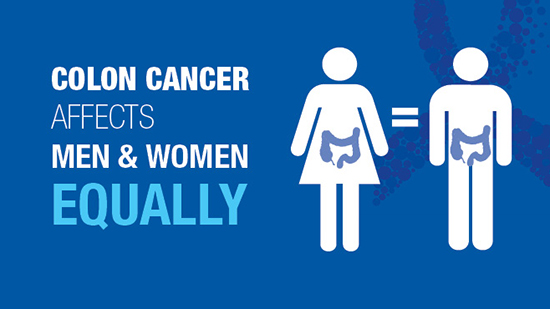
      Colon cancer affects men and women equally

      Health care professionals recommend screenings for colorectal cancer beginning at age 45. Preparing for colon cancer screening can be uncomfortable or inconvenient, but it's necessary for detecting cancer and could be lifesaving.

      A colonoscopy is the gold standard for colon cancer screenings. The doctor can view your entire colon and rectum and any abnormal tissue, such as polyps, and tissue samples or biopsies will be removed through the scope during the exam.

      As part of your decision to undergo a colonoscopy, consider your willingness or ability to follow the preparation instructions for specific colon cancer screening tests. You are required to avoid solid foods the day before the exam, adjust your medications and take a special prep laxative prescribed by your provider to empty your colon. You will need to limit daily activities accordingly and anticipate some level of gastrointestinal discomfort.

      colon illustration

      What will it be like the day of the procedure?

      The procedure takes about 30 to 60 minutes. You will need to allow for additional time to check in and recover after the procedure if you received sedation.

      During a colonoscopy, a long, flexible tube called a colonoscope is inserted into the rectum. A tiny video camera at the tip of the tube allows the doctor to detect changes or abnormalities inside the entire colon. If you are not sedated, you may choose to watch the video during the procedure.

      When sedation is used, it can take several hours to wear off, and you will need someone to take you home. Patients are more often choosing to have a sedation-free colonoscopy.

      Rare complications may include bleeding from the site where a biopsy was taken, or a polyp or other abnormal tissue was removed, or bleeding from a tear in the colon or rectum wall. Cramping or bloating might occur afterward.

      What about cost and insurance issues?

      Find out how much colon cancer screenings cost, as well as which tests your insurance company covers. Consider whether you're willing to pay out of pocket if necessary. Screening is recommended starting at age 45 and generally repeated every 10 years if no abnormalities are found and you don't have an increased risk of colon cancer.

      A colonoscopy may also be recommended earlier if there is a family history of colon cancer diagnosis in your first degree relatives. A good rule of thumb is to start screenings 10 years prior to your family member’s age of diagnosis. For example, if your parent was diagnosed at 53, begin your screenings at 43.

      What's the bottom line?

      Choosing to have a colon cancer screening test may not be an easy decision, but it's a potentially lifesaving one. There are various screenings available, so discussing these options with your health care provider is important.

      Commit to a screening schedule based on your personal risk factors. Remember, the earlier colon cancer is detected, the easier it is to treat.

      Learn more about colorectal cancer:

      • Reduce your risk for colon cancer.
      • Learn the common signs and symptoms of colon cancer.
      • Understand your colon cancer screening options.
      • Read FAQ about the stool DNA test for colon cancer.

      Jamie Zighelboim, M.D., is a gastroenterologist in Eau Claire, Wisconsin.

      Topics in this Post
      • Gastrointestinal Health
      • Colorectal Health

      Related Posts

      Couple sitting and smiling Colorectal cancer Q&A
      Selecting fruit in grocery store 5 things you can do to keep your colon healthy
      Hand and eye neck tattoo Polyps: Colon cancer culprits
      Mayo Clinic Health System
      About Us
      Careers
      Volunteer
      Donate
      Contact Us
      Patient Care
      Patients & Visitors
      Classes & Events
      Mayo Clinic Connect
      Mayo Clinic
      Resources
      Referrals
      Community Resources
      Financial Assistance
      Price Transparency
      Compliance
      Notice of Nondiscrimination
      Notice of Privacy Practices
      No Surprises Act
      Terms of Use
      Manage Cookie
      Privacy Policy
      © 2018 - 2026 Mayo Clinic Health System