• Patient Portal
  • Pay Bill
  • Request Appointment
MCHS_Logo_2024_BLACK
    • Cardiology (Heart)
    • Gastroenterology & Hepatology (Digestive Care)
    • Neurosurgery
    • Obstetrics & Gynecology (OB-GYN)
    • Oncology (Cancer)
    • Orthopedics & Orthopedic Surgery (Bones)
    • Primary Care
    • Spine Care
    • Sports Medicine
    • Virtual Care 24/7
    View all specialties
  • Providers
  • Minnesota

    • Albert Lea
    • Austin
    • Blooming Prairie
    • Butterfield
    • Cannon Falls
    • Fairmont
    • Faribault
    • Lake City
    • Mankato
    • New Prague
    • Northfield
    • Owatonna
    • Plainview
    • Red Wing
    • Sherburn
    • St. James
    • Waseca
    • Zumbrota

    Wisconsin

    • Arcadia
    • Barron
    • Bloomer
    • Chetek
    • Chippewa Falls
    • Eau Claire
    • Ellsworth
    • Glenwood City
    • Holmen
    • La Crosse
    • Menomonie
    • Mondovi
    • Onalaska
    • Osseo
    • Prairie du Chien
    • Rice Lake
    • Sparta
    • Tomah
    mchsmap Map view
    • VirtualCare
      Virtual Care
    • SameDayCare
      Same-Day Care
    • PrimaryCare
      Primary Care
    • SpecialtyCare
      Specialty Care
    • View all care options
    • PrimaryCare
      Billing & Insurance
    • SameDayCare
      Financial Assistance
    • VirtualCare
      Price Transparency
    • Hometown Health
    • Classes & Events
    • Self-guided wellness programs
    • Mayo Clinic Connect
    • Community Resources
  • Patient Portal
  • Pay Bill
  • Request Appointment
MCHS_Logo_2024_BLACK
Search Mayo Clinic Health System
    • Cardiology (Heart)
    • Gastroenterology & Hepatology (Digestive Care)
    • Neurosurgery
    • Obstetrics & Gynecology (OB-GYN)
    • Oncology (Cancer)
    • Orthopedics & Orthopedic Surgery (Bones)
    • Primary Care
    • Spine Care
    • Sports Medicine
    • Virtual Care 24/7
    • View all specialties
  • Providers
    • Minnesota

    • Albert Lea
    • Austin
    • Blooming Prairie
    • Butterfield
    • Cannon Falls
    • Fairmont
    • Faribault
    • Lake City
    • Mankato
    • New Prague
    • Northfield
    • Owatonna
    • Plainview
    • Red Wing
    • Sherburn
    • St. James
    • Waseca
    • Zumbrota

      Wisconsin

    • Arcadia
    • Barron
    • Bloomer
    • Chetek
    • Chippewa Falls
    • Eau Claire
    • Ellsworth
    • Glenwood City
    • Holmen
    • La Crosse
    • Menomonie
    • Mondovi
    • Onalaska
    • Osseo
    • Prairie du Chien
    • Rice Lake
    • Sparta
    • Tomah
    • Map view
    • Virtual Care
    • Same-Day Care
    • Primary Care
    • Specialty Care
    • View all care options
    • Billing & Insurance
    • Financial Assistance
    • Price Transparency
    • Hometown Health
    • Classes & Events
    • Self-guided wellness programs
    • Mayo Clinic Connect
    • Community Resources
Posted By
Trent Anderson DO

Trent Anderson, D.O.

Family Medicine, Hospital Medicine, Primary Care

Featured Topics
  • Behavioral Health
  • Cancer
  • Children's Health (Pediatrics)
  • Exercise and Fitness
  • Heart Health
  • Men's Health
  • Neurosurgery
  • Obstetrics and Gynecology
  • Orthopedic Health
  • Weight-loss (Bariatric) Surgery
  • Women's Health
Speaking of Health
Monday, August 1, 2022

Sunburn treatment: What works?

Topics in this Post
  • Skin Cancer
  • Family Medicine
  • Cosmetic Services
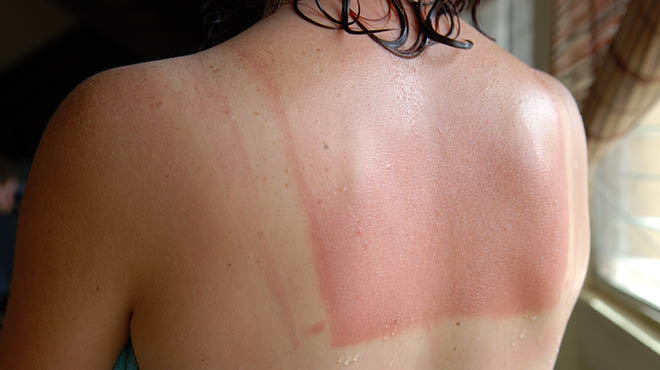
Sunburned back

Great summer days are full of relaxation, fun and plenty of sunshine. Unfortunately, spending too much time in the sun can lead to a sunburn. Your skin may be inflamed, painful and feel hot to the touch.

Any exposed part of the body, including your lips, earlobes and scalp, can burn. The symptoms of sunburn usually appear a few hours after sun exposure.

Unfortunately, there's no fast fix to soothe a sunburn. Once you have sunburn, the damage is done. After a few days, your body will begin to heal by peeling off the damaged skin’s top layer. A bad burn can take several days to heal.

In the meantime, here are a few things you can do to treat sunburn and ease your discomfort:

Keep skin cool and moist.

Apply cold compresses, such as a towel dampened with cool water, to the affected skin several times a day. Or, take a cool bath with baking soda. Apply aloe vera lotion, moisturizing cream or a nonprescription 1% hydrocortisone cream to the affected skin several times a day. Try cooling the product in the refrigerator before applying for extra soothing comfort. Avoid products containing alcohol, which can further dry out skin.

Avoid products that contain benzocaine.

Beware of sunburn treatment products containing anesthetics, such as benzocaine. There's little evidence that these products are effective. In some cases, they can irritate the skin. Benzocaine has been linked to a rare, but serious, and sometimes deadly, condition that decreases the amount of oxygen that the blood can carry. Don't use benzocaine on children younger than age 2 without supervision from a health care professional, as this age group has been most affected. If you're an adult, never use more than the recommended dose of benzocaine, and consider talking with your health care professional.

Leave blisters alone.

If blisters form, don't break them. Doing so only slows the healing process and increases the risk of infection. If needed, lightly cover blisters with gauze.

Take an over-the-counter pain reliever.

If needed, take anti-inflammatory medication, such as aspirin or ibuprofen, according to the label instructions until redness and pain subside. Don't give children or teenagers aspirin. It may cause Reye's syndrome, a rare, but potentially fatal, disease.

Treat peeling skin gently.

Within a few days, the affected area may begin to peel. This is simply your body's way of getting rid of the top layer of damaged skin. While your skin is peeling, continue to use moisturizing cream.

Drink extra water.

This helps prevent dehydration.

Talk with your health care team if your sunburn covers a large portion of your body with blisters, sunburn is accompanied by a high fever or severe pain, or severe sunburn doesn't begin to improve within a few days.

To prevent future episodes of sunburn, apply sunscreen frequently and liberally. Select a broad-spectrum product that provides protection against ultraviolet A and ultraviolet B radiation, and has a sun protection factor of at least 15.

Be careful in the sun if you take medications that make sunburn more likely. A common example is tetracycline taken orally for acne. Finally, use common sense when outdoors. Cover up and stay in the shade as much as possible.

Trent Anderson, D.O., is a Family Medicine physician in Lake City and Plainview, Minnesota.

Topics in this Post
  • Skin Cancer
  • Family Medicine
  • Cosmetic Services

Related Posts

Reflective sunglasses brimmed hat 5 simple steps to help prevent skin cancer
Hands spreading lotion What to do about dry skin
Back view of paddleboarder Don't turn your back on back acne
Mayo Clinic Health System
About Us
Careers
Volunteer
Donate
Contact Us
Patient Care
Patients & Visitors
Classes & Events
Mayo Clinic Connect
Mayo Clinic
Resources
Referrals
Community Resources
Financial Assistance
Price Transparency
Compliance
Notice of Nondiscrimination
Notice of Privacy Practices
No Surprises Act
Terms of Use
Manage Cookie
Privacy Policy
© 2018 - 2026 Mayo Clinic Health System