  • Patient Portal
  • Pay Bill
  • Request Appointment
MCHS_Logo_2024_BLACK
    • Cardiology (Heart)
    • Gastroenterology & Hepatology (Digestive Care)
    • Neurosurgery
    • Obstetrics & Gynecology (OB-GYN)
    • Oncology (Cancer)
    • Orthopedics & Orthopedic Surgery (Bones)
    • Primary Care
    • Spine Care
    • Sports Medicine
    • Virtual Care 24/7
    View all specialties
  • Providers
  • Minnesota

    • Albert Lea
    • Austin
    • Blooming Prairie
    • Butterfield
    • Cannon Falls
    • Fairmont
    • Faribault
    • Lake City
    • Mankato
    • New Prague
    • Northfield
    • Owatonna
    • Plainview
    • Red Wing
    • Sherburn
    • St. James
    • Waseca
    • Zumbrota

    Wisconsin

    • Arcadia
    • Barron
    • Bloomer
    • Chetek
    • Chippewa Falls
    • Eau Claire
    • Ellsworth
    • Glenwood City
    • Holmen
    • La Crosse
    • Menomonie
    • Mondovi
    • Onalaska
    • Osseo
    • Prairie du Chien
    • Rice Lake
    • Sparta
    • Tomah
    mchsmap Map view
    • VirtualCare
      Virtual Care
    • SameDayCare
      Same-Day Care
    • PrimaryCare
      Primary Care
    • SpecialtyCare
      Specialty Care
    • View all care options
    • PrimaryCare
      Billing & Insurance
    • SameDayCare
      Financial Assistance
    • VirtualCare
      Price Transparency
    • Hometown Health
    • Classes & Events
    • Self-guided wellness programs
    • Mayo Clinic Connect
    • Community Resources
  • Patient Portal
  • Pay Bill
  • Request Appointment
MCHS_Logo_2024_BLACK
Search Mayo Clinic Health System
    • Cardiology (Heart)
    • Gastroenterology & Hepatology (Digestive Care)
    • Neurosurgery
    • Obstetrics & Gynecology (OB-GYN)
    • Oncology (Cancer)
    • Orthopedics & Orthopedic Surgery (Bones)
    • Primary Care
    • Spine Care
    • Sports Medicine
    • Virtual Care 24/7
    • View all specialties
  • Providers
    • Minnesota

    • Albert Lea
    • Austin
    • Blooming Prairie
    • Butterfield
    • Cannon Falls
    • Fairmont
    • Faribault
    • Lake City
    • Mankato
    • New Prague
    • Northfield
    • Owatonna
    • Plainview
    • Red Wing
    • Sherburn
    • St. James
    • Waseca
    • Zumbrota

      Wisconsin

    • Arcadia
    • Barron
    • Bloomer
    • Chetek
    • Chippewa Falls
    • Eau Claire
    • Ellsworth
    • Glenwood City
    • Holmen
    • La Crosse
    • Menomonie
    • Mondovi
    • Onalaska
    • Osseo
    • Prairie du Chien
    • Rice Lake
    • Sparta
    • Tomah
    • Map view
    • Virtual Care
    • Same-Day Care
    • Primary Care
    • Specialty Care
    • View all care options
    • Billing & Insurance
    • Financial Assistance
    • Price Transparency
    • Hometown Health
    • Classes & Events
    • Self-guided wellness programs
    • Mayo Clinic Connect
    • Community Resources

Recent Posts

  • ColdfluRSV blog photo
    Speaking of Health
    When to seek care for cold, flu and RSV
    March 10, 2026
  • winter outdoor lady and girl 660x370
    Speaking of Health
    Is your sinus pressure a sinus infection?
    February 09, 2026
  • Izzy Iverson
    Patient Stories
    Unexpected vacation ending leads to rare tumor discovery
    February 05, 2026
Featured Topics
  • Behavioral Health
  • Cancer
  • Children's Health (Pediatrics)
  • Exercise and Fitness
  • Heart Health
  • Men's Health
  • Neurosurgery
  • Obstetrics and Gynecology
  • Orthopedic Health
  • Weight-loss (Bariatric) Surgery
  • Women's Health
Speaking of Health
Monday, January 19, 2015

What is Mayo Clinic’s Diabetes Technology Clinic?
Topics in this Post
  • Diabetes
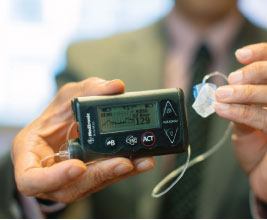
DrKudva_ClosedLoopSystem

Insulin was discovered in 1921. But until about 35 years ago, people with diabetes still relied on multiple daily insulin injections to manage their blood glucose and avoid life-threatening situations. Improvements in technology are now making lives easier for people with the disease.

Insulin pumps were developed to deliver insulin subcutaneously using settings prescribed by endocrinologists and implemented by patients, but a new device works with insulin pumps to not only monitor glucose, but control insulin levels. 

One of the newest technologies used to improve diabetes care is the first-generation Medtronic closed-loop (artificial pancreas) device, which was introduced to patients at Mayo Clinic's Diabetes Technology Clinic in September 2013. The device monitors glucose continuously and can stop the delivery of insulin from the insulin pump when glucose decreases to a preset level.

"This closed-loop technology has been the most quickly accepted technology for patients that I have ever seen," says Yogish Kudva, M.B.B.S., director.

Continuous glucose monitoring can be used with injections or an insulin pump, on which the closed-loop system shows data. "We have glucose data on a regular basis — every one to five minutes when patients use the closed loop system," says Dr. Kudva. "When glucose decreases to a preprogrammed threshold decided by patient and provider, insulin delivery pauses."

More than 40,000 patients have started using this technology since September, which Dr. Kudva calls "fantastic movement." The Diabetes Technology Clinic was instituted 10 years ago and gradually expanded its capacity to see patients who use or have interest in using continuous glucose monitors, pumps or closed loop systems.

DrKudva_lg

"People with diabetes essentially have two major challenges," says Dr. Kudva. "One is glucose swings with low and high blood sugar. The second is making sure sugar levels and other risk factors are dealt with appropriately."

The artificial pancreas has the ability to improve glucose control by reducing occurrences of high sugar levels and ideally eliminating low sugar levels altogether.

"The major limiting factor without a closed-loop system is an insulin reaction or low glucose," says Dr. Kudva. Now, with a closed-loop system, the frequency of these reactions is reduced substantially.

Dr. Kudva says determining whether artificial devices are a good fit depends on the individual.

"We evaluate patients and address their concerns and values," he says. "Are they willing to insert one or two systems under their skin? Are they willing to have devices attached to their body? We've learned in the last 10 years that patients require various amounts of help for particular challenges, but there's no doubt that if the technology is used properly, it offers every diabetes patient the best glucose control."

Dr. Kudva is certain that the technology and support available through the Diabetes Technology Clinic have an impact on patients' everyday lives. "We know that improving glucose control lessens complications. Reducing insulin reactions will have an impact on complications. More importantly, the technology allows patients to have less fear and better control."

Topics in this Post
  • Diabetes

Related Posts

Couple with head resting on shoulder and laughing How to live well with diabetes
Healthy living with diabetes: Take small steps, get physical activity, take time or yourself and eat healthy. Tips for living well with Type 2 diabetes
african-american-couple-smiling Caring for a loved one with diabetes
Mayo Clinic Health System
About Us
Careers
Volunteer
Donate
Contact Us
Patient Care
Patients & Visitors
Classes & Events
Mayo Clinic Connect
Mayo Clinic
Resources
Referrals
Community Resources
Financial Assistance
Price Transparency
Compliance
Notice of Nondiscrimination
Notice of Privacy Practices
No Surprises Act
Terms of Use
Manage Cookie
Privacy Policy
© 2018 - 2026 Mayo Clinic Health System